September 15, 2026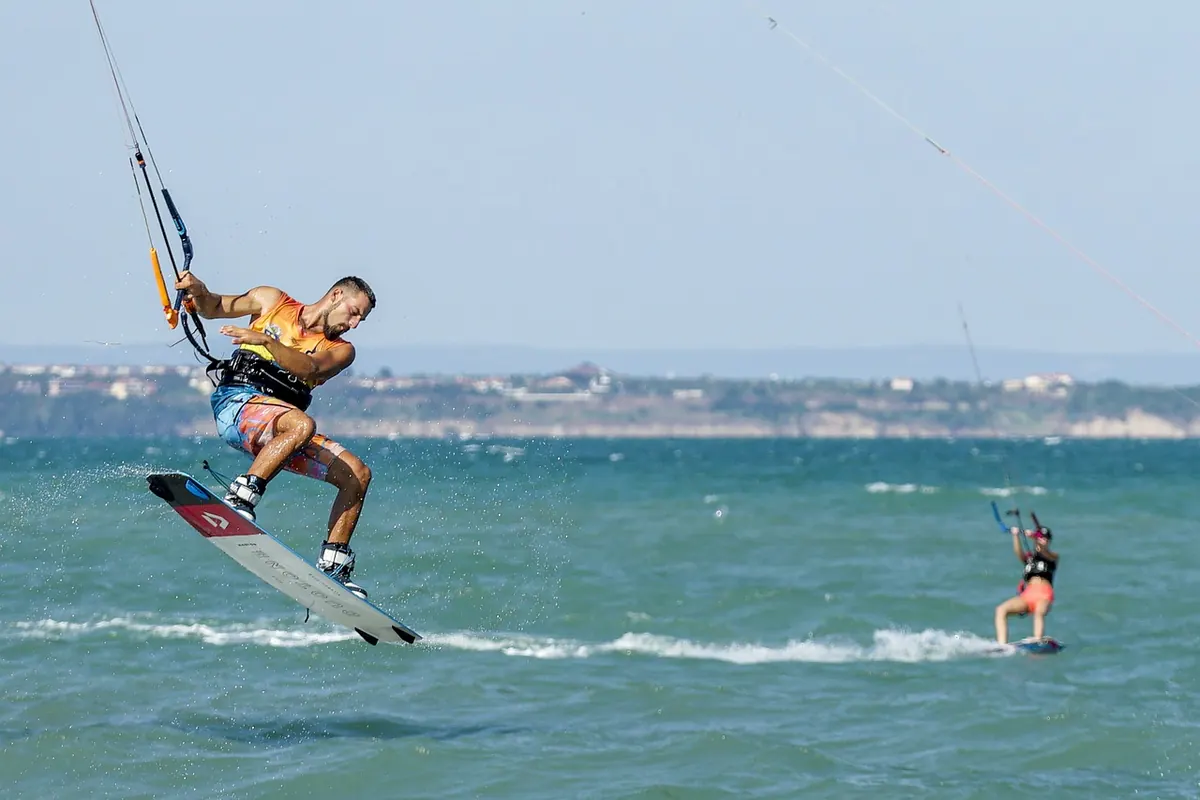
A kite, a steady breeze and a bit of open ground. That is genuinely all it takes to get airborne for the first time, and most beginners manage it inside fifteen minutes once a few basics click. The trick is not to chase height straight away. Spend your first hour learning how the kite behaves, how the wind feels on your face, and how the line talks back to you through your fingers. The altitude looks after itself.
What you actually need
Beginners usually turn up with the wrong kite or not enough line. Keep the first session simple.
- A single-line kite. A diamond or a delta around a metre to a metre and a half across is ideal. Two-line and four-line kites are steerable sport kites — brilliant fun, but they demand constant input and will spoil a relaxed first hour.
- Enough line. Thirty to fifty metres on a winder is plenty. More line means longer walks to retrieve a downed kite.
- A tail. Most beginner kites come with one. It adds drag and keeps the kite pointing into the wind.
- Thin gloves. Line running fast through bare hands will sting.
- Layers and sensible shoes. You will be standing in a field for an hour, and hands go cold quickly.
Check the wind range printed on the packaging before you leave. Most beginner kites fly happily in a light to moderate breeze and become a handful above that.
Pick the right patch of ground
Open, flat and empty beats scenic every time. A playing field, a wide beach or a large park with a clear middle all work. What you need is space in every direction, because the kite goes wherever the wind takes it and you will be walking after it.
Avoid anywhere with trees within a couple of hundred metres — they bend the wind into swirls that flip a light kite and dump it on the grass. Keep well clear of overhead power lines, roads, car parks and airfields, and be aware that some parks, nature reserves and beaches restrict kite flying, particularly during nesting season or where there is livestock. A glance at local signage saves an awkward conversation.
Read the wind before you launch
Stand still for a minute and look around. Flags, long grass, smoke and the surface of water all tell you what the air is doing. So does your face: a breeze you can feel on both cheeks is enough to fly.
For a first flight you want Force 2 to 3 on the Beaufort scale — leaves rustling, small twigs moving, flags fluttering gently. Gusty days are the enemy of beginners: the kite lurches, the line goes slack and nothing you do seems to help. If the wind is switching direction every few seconds, come back another day.
Direction matters as much as strength. Stand with your back to the wind and the kite in front of you, so the breeze flows over your shoulder and into the kite's face. On the coast, sea breezes often build through the afternoon. Inland, the middle of the day brings choppy air, so early morning and evening are usually calmer.
Setting up and your first launch
Assembly takes five minutes. Fit the spars into their pockets, check the spine is straight, attach the tail, and make sure the bridle — the short lines joining the kite to the main line — is not twisted. Then work through this order:
- Unwind ten to fifteen metres of line and lay it out downwind, clear of your feet.
- Face downwind with your back to the wind, and hold the kite up by the top of its spine, nose pointing skyward.
- Let the wind fill the sail. You will feel it begin to pull.
- Release the kite and take one deliberate step backwards, keeping light tension on the line.
- As it climbs, let line out slowly. Stop releasing if the kite starts to wobble.
If nobody is holding the kite for you, prop it nose-up against a tuft of grass or a small bag, walk back until the line is taut, and give a gentle tug. It will rise on its own.
Simple control in the first ten minutes
Line tension is your throttle. Let line out and the kite climbs; pull line in and it slows or descends. That is the whole skill in one sentence, and everything else follows from it.
Aim to keep the kite at roughly 45 to 60 degrees above the horizon. Directly overhead the line goes slack, the sail folds and the kite flutters down — a frustrating way to end a good flight. Find the point where the line is taut but not straining.
If the kite drifts left or right, walk that way rather than yanking the line. A single-line kite has no steering, so your feet are the controls. If it noses into a dive, let line slip through your hands; it will usually right itself and climb again. Pulling hard when it dives only drives it into the ground faster. Move slowly, too — small corrections beat big ones, and the kite responds better to a gentle hand than a firm one.
Landing, tangles and packing away
To land, walk steadily towards the kite while winding line in and keeping tension. As it drops, reach up and catch it by the spine, never by the line. If someone offers to help, let them take the kite rather than the string.
Tangled line is normal. Lay it out in long loops across the grass and shake the knots loose; pulling them tight only makes the job worse. Wind the line back onto the winder under light tension, and never wrap it around your hand — a gust can tighten a loop faster than you can react.
Finally, take the spars out and pack the kite flat. Folding a sail around its own frame is how spars get bent, and a bent spar never flies straight again.
Where to go next
Come back to the same spot on a similar day and repeat the routine. Familiarity with one field and one kite teaches more in an hour than a dozen flights in different conditions. Once launches feel routine and you can hold a steady height without thinking about it, try a two-line kite. Steering with both hands is a different pleasure entirely, and it sharpens your feel for the wind in a single session.
Two rules to carry with you. Never fly in or near a thunderstorm, and never fly close to overhead power lines. If a line does touch a cable, let go immediately, keep everyone clear and contact the electricity network rather than trying to retrieve the kite yourself.
Photo: Anestiev / Pixabay